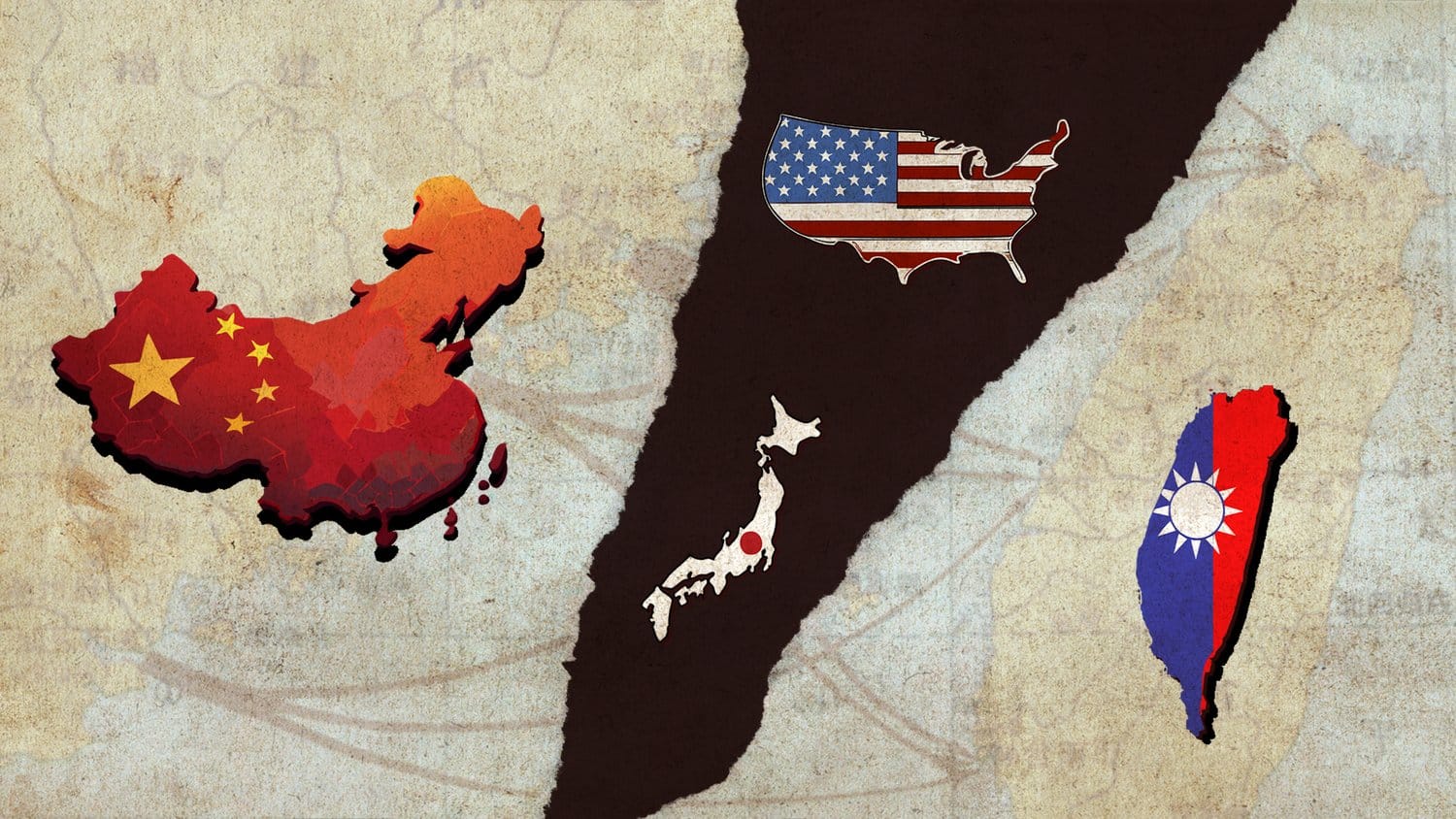
The Irreplaceable Value of Taiwan: Why Its Strategic Importance Far Outweighs China's Debt
In the complex geopolitical chess game playing out in the Indo-Pacific, audacious proposals sometimes surface – none perhaps as short-sighted as the idea of abandoning democratic Taiwan in exchange for the $1.14 trillion of American debt held by China. This suggestion, even making it to public discourse, fundamentally misunderstands Taiwan's profound strategic importance, not just to the United States but to global stability, democratic values, and the world economy. To consider such a trade is to gravely underestimate the multifaceted role Taiwan plays and to overlook the long-term ramifications of appeasing an authoritarian power like Peking. Taiwan’s existence, particularly its robust democracy, stands in direct and compelling **taiwan opposition peking's** authoritarian narrative, making it an indispensable asset in the global arena.
Taiwan: A Thriving Democracy Challenging Peking's Narrative
At its core, Taiwan represents a powerful rebuttal to the notion that Chinese culture is incompatible with democracy. Far from being a mere pawn in a larger power struggle, Taiwan is a vibrant, free-market democracy with a thriving two-party system and a deep commitment to human rights. Its citizens enjoy freedoms and civil liberties akin to those in Western Europe or America – a stark contrast to the tightly controlled society on the mainland. This democratic success story, unfolding right off China's coast, poses a significant ideological challenge to the Communist Party of China (CPC). Peking's narrative often propagates that its authoritarian model is uniquely suited for Chinese society, and any deviation leads to chaos or foreign subjugation. Taiwan's prosperity and stability directly contradict this claim, illustrating that a Chinese society can indeed flourish under democratic governance.
The very existence of a democratic Chinese republic, built on the principles of self-determination and popular sovereignty, fundamentally undermines Peking's legitimacy and its insistence on a single, authoritarian path. This is precisely why Taiwan's flourishing democracy is seen by the CPC not just as a territorial dispute, but as an existential threat to its one-party rule. It lights the way for an alternative path of development that the people of mainland China might one day demand for themselves. For a deeper dive into how Taiwan's model challenges Beijing, explore
Taiwan: A Democratic Model Challenging Beijing's Narrative. The notion of power originating from the people themselves – rather than being handed down by an entrenched party elite – is an idea that deeply unsettles the leadership in Peking, explaining their vigorous **taiwan opposition peking** propaganda efforts.
Global Stability and China's Unconventional Approach
Beyond its symbolic democratic value, Taiwan’s strategic importance is deeply intertwined with global stability and international norms. The reference context accurately points out that China "does not play by the same rules as everybody else. It cheats on everything, bullies everybody, and demands that far and wide the lies it defines as truth be seen as true." This approach, exemplified by its actions in the South China Sea, its Belt and Road Initiative's debt traps, and its systematic human rights abuses, puts it on a collision course with the interests of the rest of the world.
Should China successfully annex Taiwan, it would not only extinguish a beacon of democracy but also significantly embolden Peking's revisionist agenda. Such an outcome would validate its coercive tactics and demonstrate that international norms, treaties, and the principle of self-determination can be overridden by military might and economic leverage. This would destabilize the entire Indo-Pacific region, impact crucial shipping lanes, and potentially trigger an arms race, as neighboring countries would feel compelled to enhance their defenses against an increasingly assertive China. The geopolitical fallout would be catastrophic, far outweighing any short-term financial relief from debt forgiveness. A world where China dictates terms without adherence to international law would be far less secure and prosperous for everyone.
The Indispensable Role in Global Economy and Technology
Taiwan's strategic value extends dramatically into the global economy, particularly in the realm of advanced technology. Taiwan Semiconductor Manufacturing Company (TSMC), a Taiwanese company, is the world's largest contract chipmaker and a crucial supplier of semiconductors to global tech giants like Apple, Nvidia, and Qualcomm. These chips are the lifeblood of modern technology, powering everything from smartphones and artificial intelligence to critical military hardware and automotive systems. Taiwan currently produces over 60% of the world's semiconductors and an astonishing 90% of the most advanced chips.
Any disruption to Taiwan's semiconductor industry, particularly through a Chinese takeover, would send catastrophic shockwaves through the global economy. Supply chains would collapse, technological innovation would grind to a halt, and industries worldwide would face unprecedented setbacks. This isn't merely a matter of economic inconvenience; it’s a national security issue for virtually every technologically advanced nation. The leverage Taiwan holds in this critical sector is not just an economic advantage but a strategic imperative for the world. Protecting Taiwan means safeguarding the very foundation of the global digital economy and ensuring the continued flow of essential technological components that underpin modern society.
Historical Context, Identity, and Self-Determination
While often framed in Western discourse as merely a front line in an ideological struggle, Taiwan possesses a rich history and a complex identity that predates and transcends contemporary geopolitical rivalries. For centuries, the island was deeply linked to the Chinese mainland through migration, trade, language, and culture. However, its historical trajectory, marked by periods of Dutch, Spanish, and Japanese colonization, and later by the retreat of the Nationalist government, has forged a distinct Taiwanese identity.
Today, the crucial point is not merely Taiwan���s historical ties to the mainland, but the undeniable right of its people to determine their own destiny. Whether Taiwan ultimately becomes part of China, or remains independent, is a decision that must be made solely by the Taiwanese people themselves, free from coercion. This principle of self-determination is what China fears most – not just outright independence, but the precedent that a people, even those with historical and cultural links, can choose their own path. To sacrifice Taiwan for financial considerations would be to betray this fundamental human right and empower a regime that actively suppresses such freedoms. Understanding Taiwan's multifaceted story and its journey towards a distinct identity is vital, as explored in
Taiwan's Complex Identity: Beyond US-China Cold War Framing.
Conclusion: A Debt Too High to Pay
The idea of trading Taiwan for a reduction in American debt is a false economy and a profound miscalculation of national and international interests. Taiwan is not merely an island, nor is its value quantifiable by financial metrics. It is a vibrant democracy, a critical node in the global technological supply chain, and a bulwark against authoritarian expansion. Its very existence provides a powerful **taiwan opposition peking's** one-party rule, offering an alternative vision of a Chinese society that embraces freedom and human rights.
Abandoning Taiwan would not only be a moral failing but a strategic blunder of epic proportions, jeopardizing global stability, economic prosperity, and the foundational principles of democracy and self-determination. The cost of such a concession – in terms of emboldening an authoritarian regime, destabilizing the Indo-Pacific, and disrupting the global economy – would be immeasurable and far exceed any financial "benefit" derived from debt reduction. Taiwan's strategic importance is, quite simply, priceless.